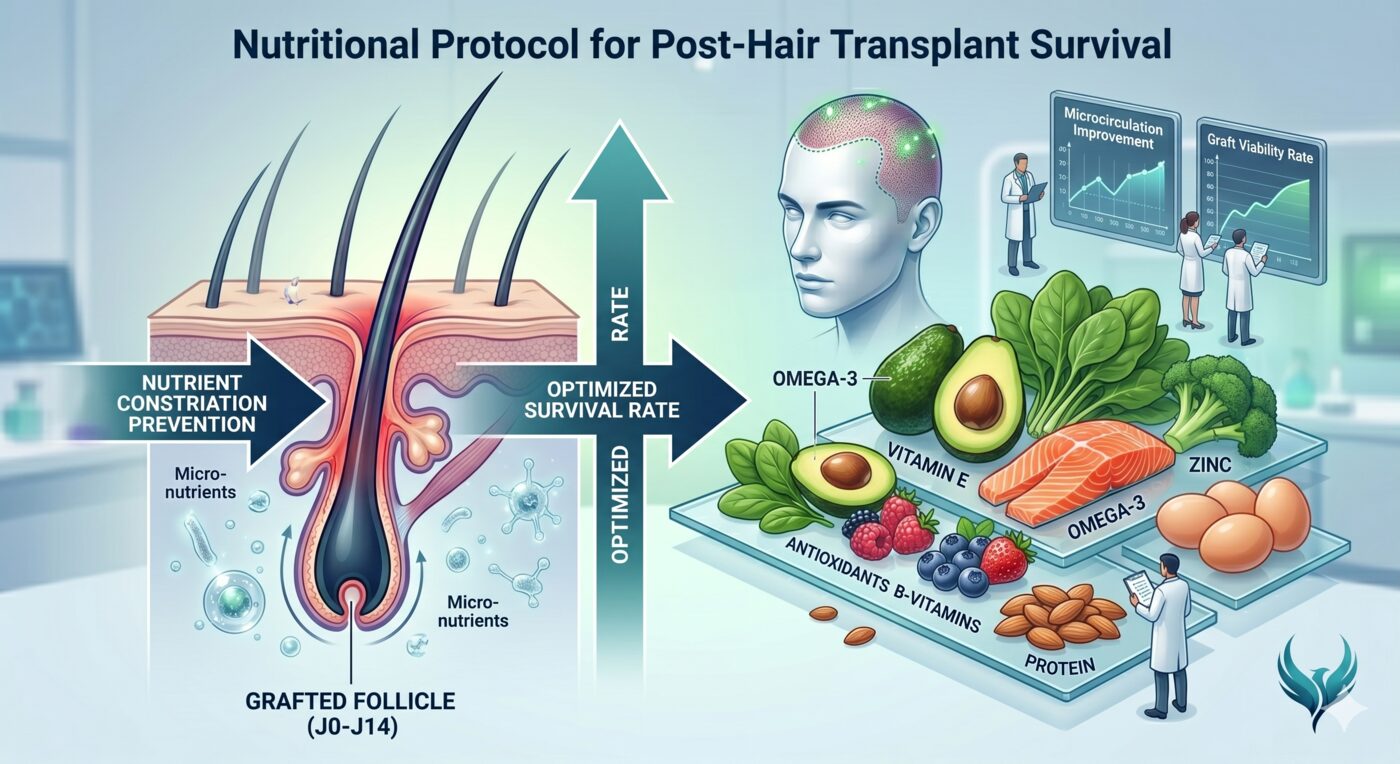
A successful hair transplant does not depend solely on the surgeon's dexterity. It rests on a critical and often underestimated phase: the immediate post-operative period (the first 14 days). It is during this window that freshly transplanted grafts fight for their survival. At Phoenix Hair Paris, we consider nutrition a central pillar of success.
The Critical Phase: Imbibition vs Vascularisation
Temporary Ischaemia (Day 0)
When a graft is extracted from the donor area, it is cut from its blood supply. This is the ischaemia phase. While conservation solutions maintain its viability outside the body, time is of the essence.
Day 0 to 3: Survival Through Plasmatic Imbibition
During the first 72 hours, the graft survives through plasmatic imbibition — absorbing oxygen and nutrients that diffuse through the surrounding interstitial plasma. The nutritional quality of your plasma is therefore critical.
Day 4 to 14: Neovascularisation
From day 4, the first micro blood vessels begin to penetrate the graft's dermal papilla. This connection remains fragile. The Nutritional Protocol aims to support this nascent vascularisation.
The Phoenix Hair Nutritional Protocol
A. High-Quality Proteins: The Building Blocks of Hair
Hair is 95% keratin. To repair damaged tissue and stimulate the new hair matrix, your body needs a massive intake of amino acids (L-Cysteine, L-Methionine, L-Arginine). Super-foods: organic eggs, white fish, poultry, lentils, chickpeas.
B. Omega-3 Fatty Acids: Anti-inflammatory and Vasodilatory
A transplant triggers necessary inflammation, but excessive inflammation is harmful. Omega-3s modulate this response and improve microcirculation towards the grafts. Super-foods: wild salmon, mackerel, sardines, flaxseed oil, walnuts, chia seeds.
C. Zinc: Healing Catalyst
Zinc is critical for protein synthesis, cell division and wound healing. A deficiency directly impairs the ability of grafts to anchor solidly. Super-foods: seafood, pumpkin seeds, lean beef, dark cocoa.
D. Hydration: The Nutrient Carrier
The interstitial plasma that enables imbibition is primarily composed of water. Even mild dehydration increases its viscosity and impairs nutrient diffusion to the graft. Target: 2.5 to 3 litres of water per day for the first 14 days.
Foods to Avoid: Graft Saboteurs
- Refined Sugar: triggers insulin spikes causing systemic inflammation (sodas, pastries, white bread)
- Excess Salt (Sodium): causes water retention and hypertension, altering micro-vessel permeability
- Alcohol: massive dehydration and depletion of B vitamins and zinc reserves
- Tobacco (Nicotine): powerful vasoconstrictor drastically reducing tissue oxygen supply, increasing graft necrosis risk
Conclusion
Maximising graft survival is not a matter of chance, but of rigorous biological strategy. By following the Phoenix Hair Paris Nutritional Protocol during the first 14 days, you provide your hair implants with the ideal metabolic environment to survive, repair and anchor solidly. Your nutrition is the fuel for your future hair.